Product Description
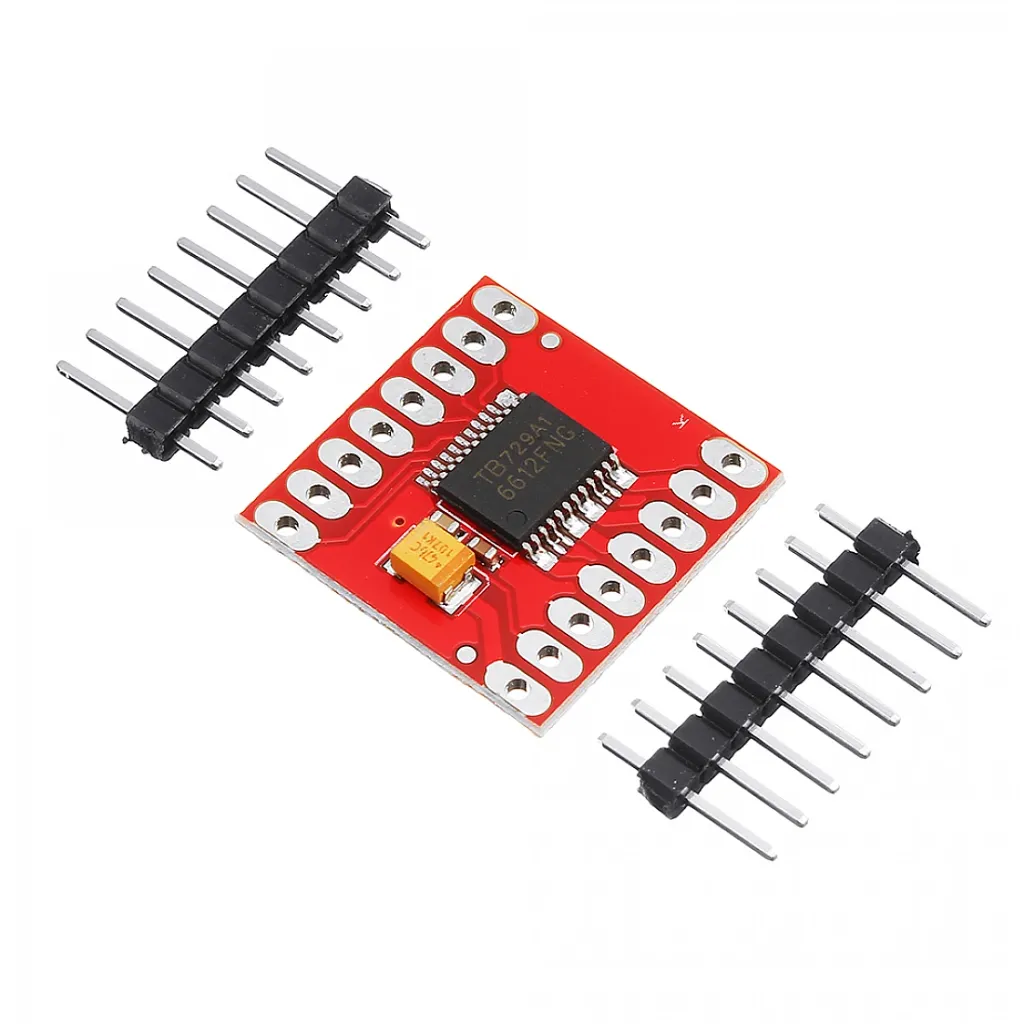
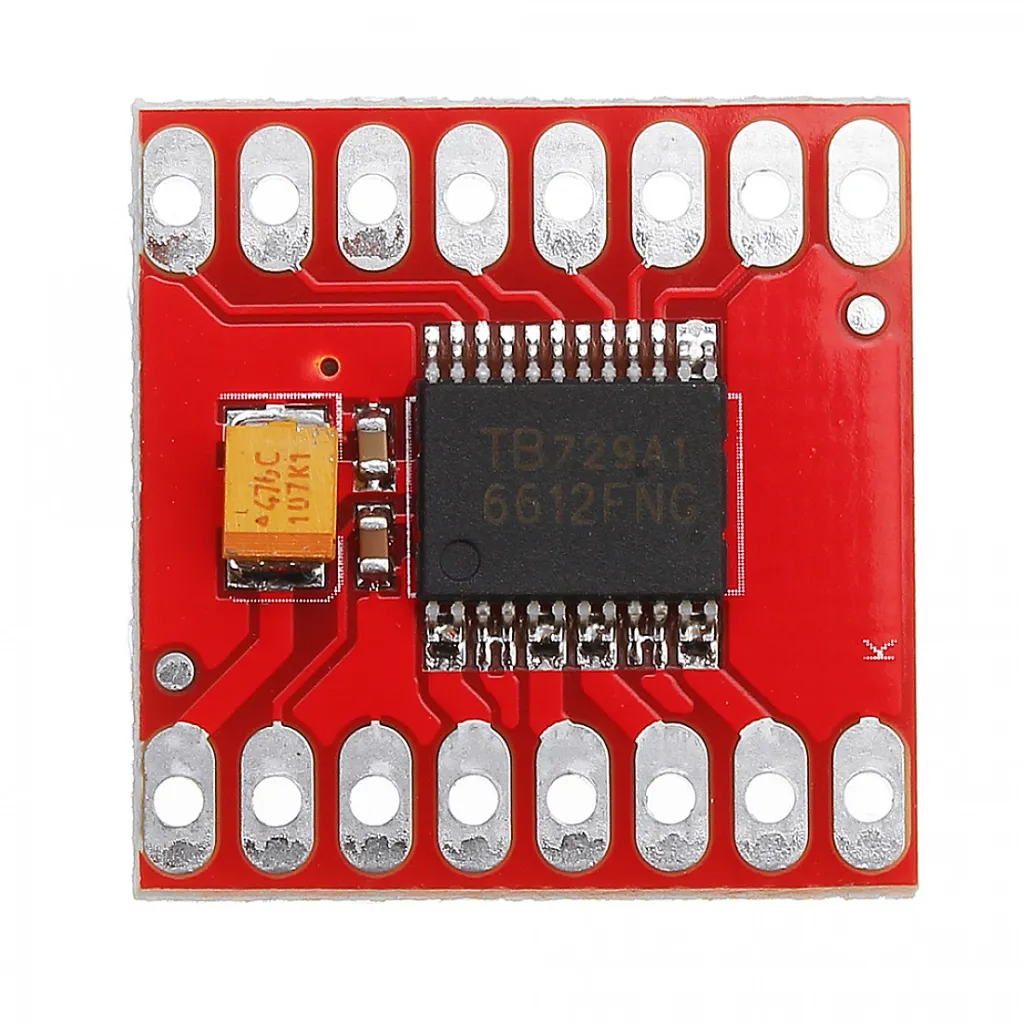
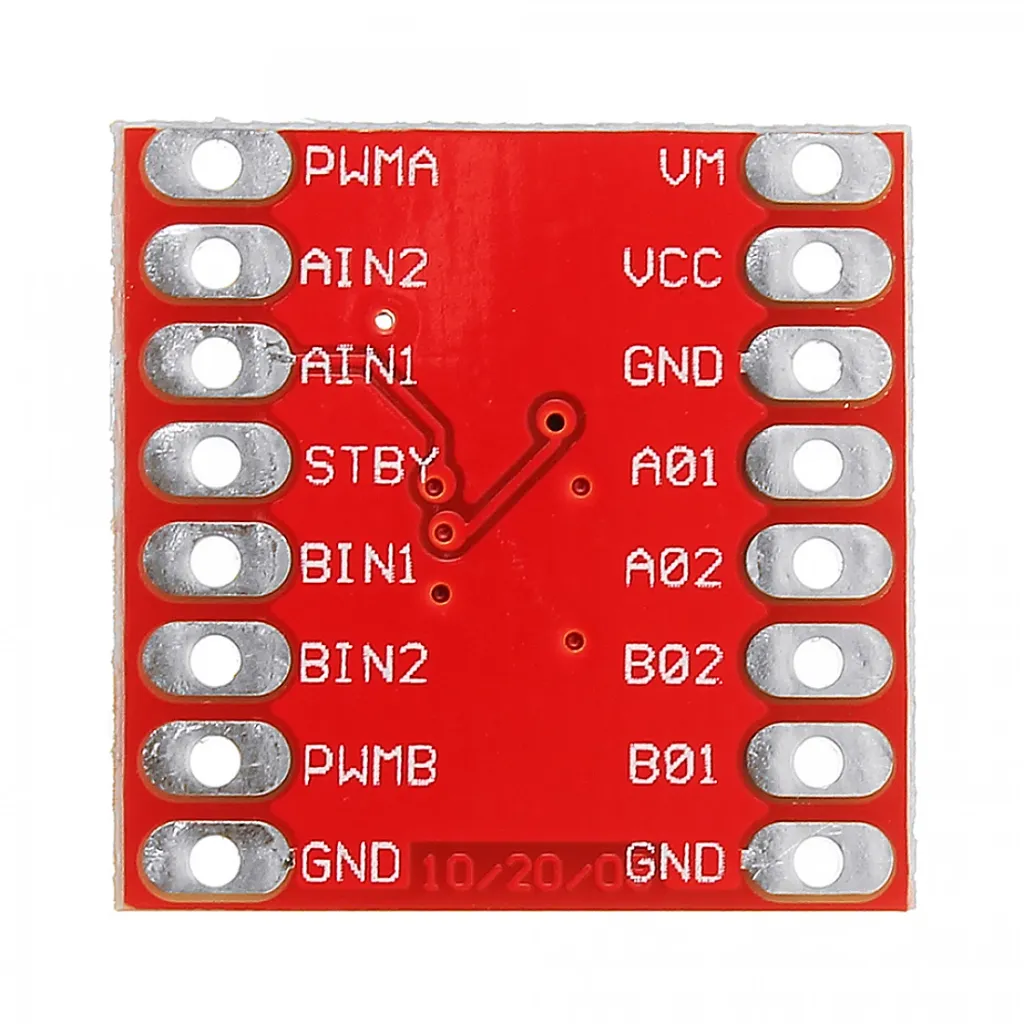
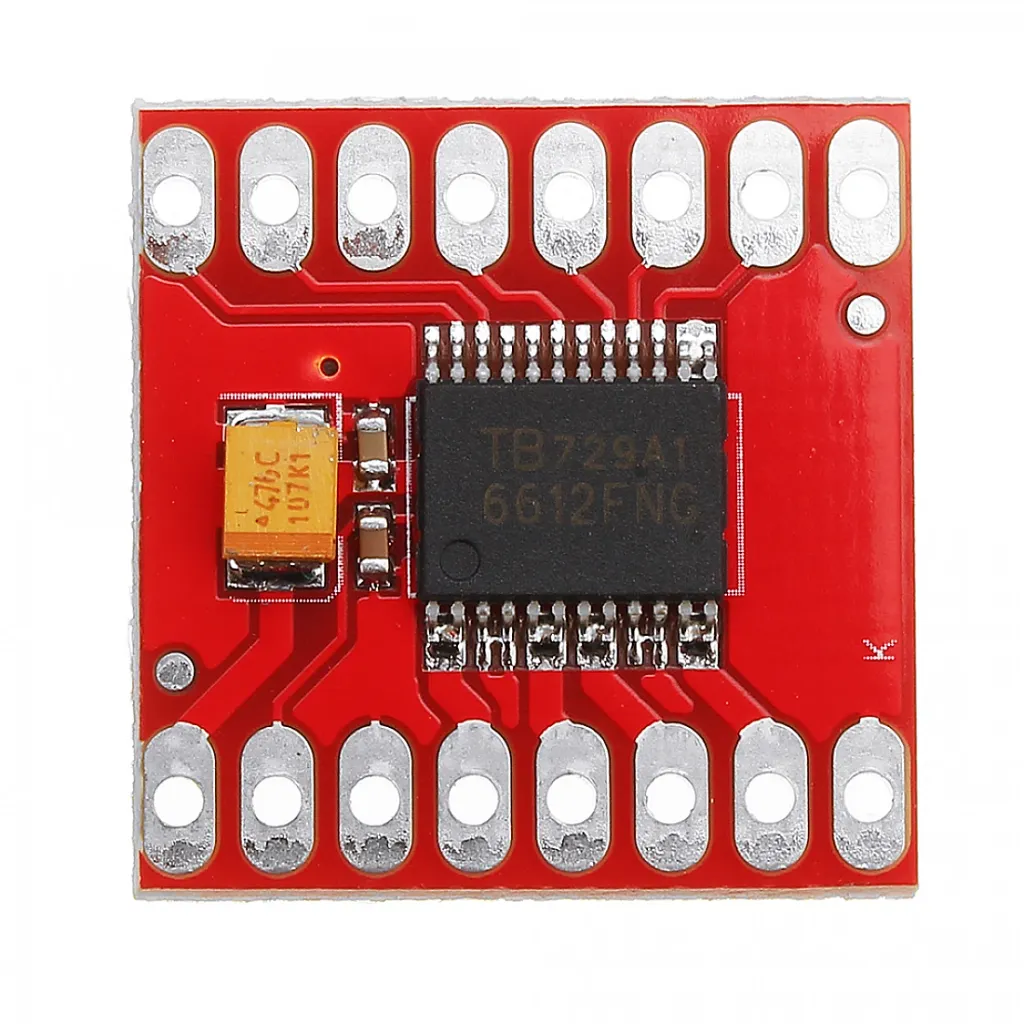
The TB6612FNG Dual Motor Driver Module is a compact, efficient motor driver designed to control two DC motors or one bipolar stepper motor in robotics and embedded projects. Based on the TB6612FNG H-bridge driver IC from Toshiba, this module delivers smoother operation, lower heat generation, and better performance than classic L298 modules — especially at lower voltages.
With 1 A continuous current per channel, the driver supports bidirectional motor control with PWM speed regulation. Its logic inputs are compatible with 3.3 V and 5 V microcontrollers, making it easy to interface with Arduino, ESP32, STM32, Raspberry Pi (with level shifting), and similar platforms. Typical use cases include robotics motion control, wheeled robots, mini vehicles, automated systems, and actuator control.
Key Features
Dual H-bridge motor driver using TB6612FNG IC
Drives two DC motors independently
Supports one bipolar stepper motor
Up to 1 A continuous current/channel
Logic compatible with 3.3 V / 5 V controllers
PWM speed control support
Lower heat & higher efficiency vs. L298
Compact and breadboard-friendly
Package Includes
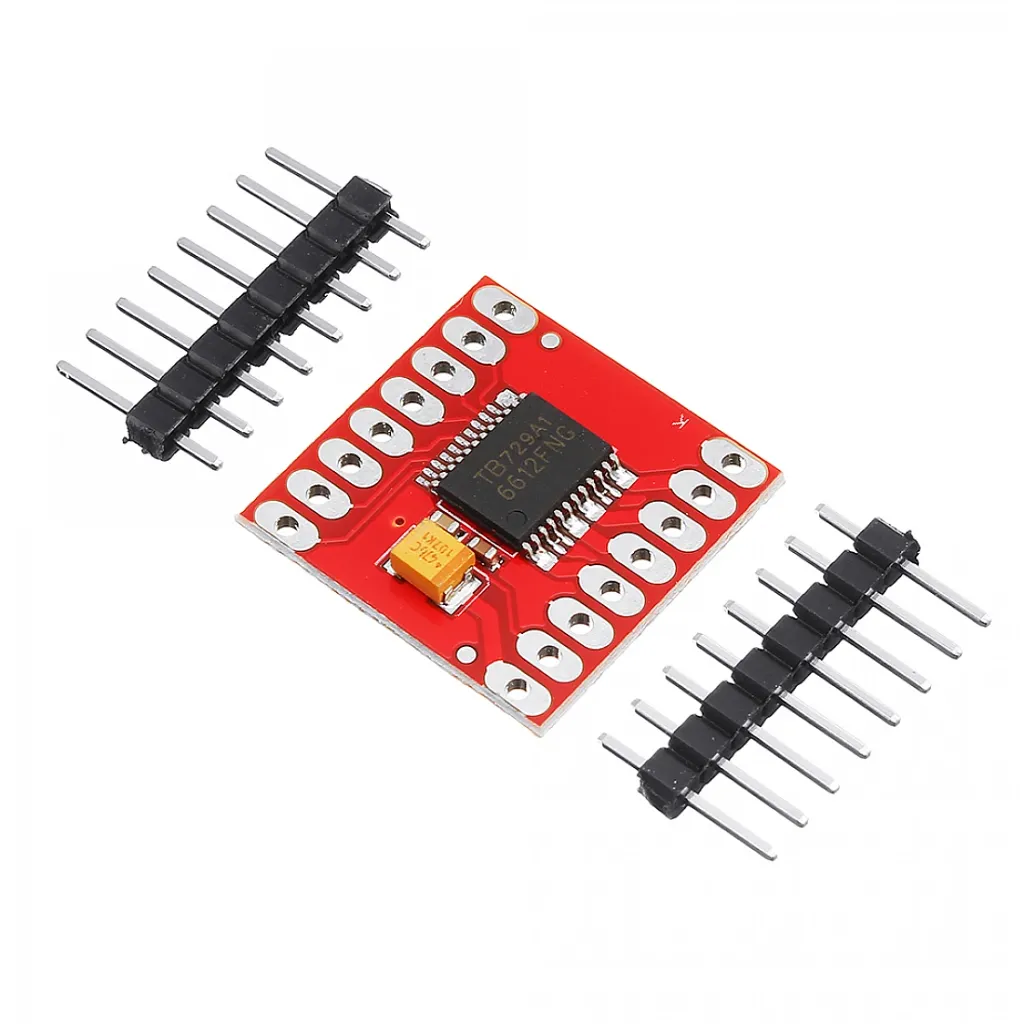
1 × TB6612FNG Motor Driver Module
Header pins (varies by supplier)
Technical Specifications
Parameter | Specification |
Driver IC | TB6612FNG |
Motor Channels | 2 DC motors / 1 stepper |
Continuous Current | 1 A per channel |
Peak Current | ~3.2 A (short bursts) |
Logic Voltage | 3.3 V – 5 V compatible |
Motor Voltage | 2.5 V – 13.5 V DC |
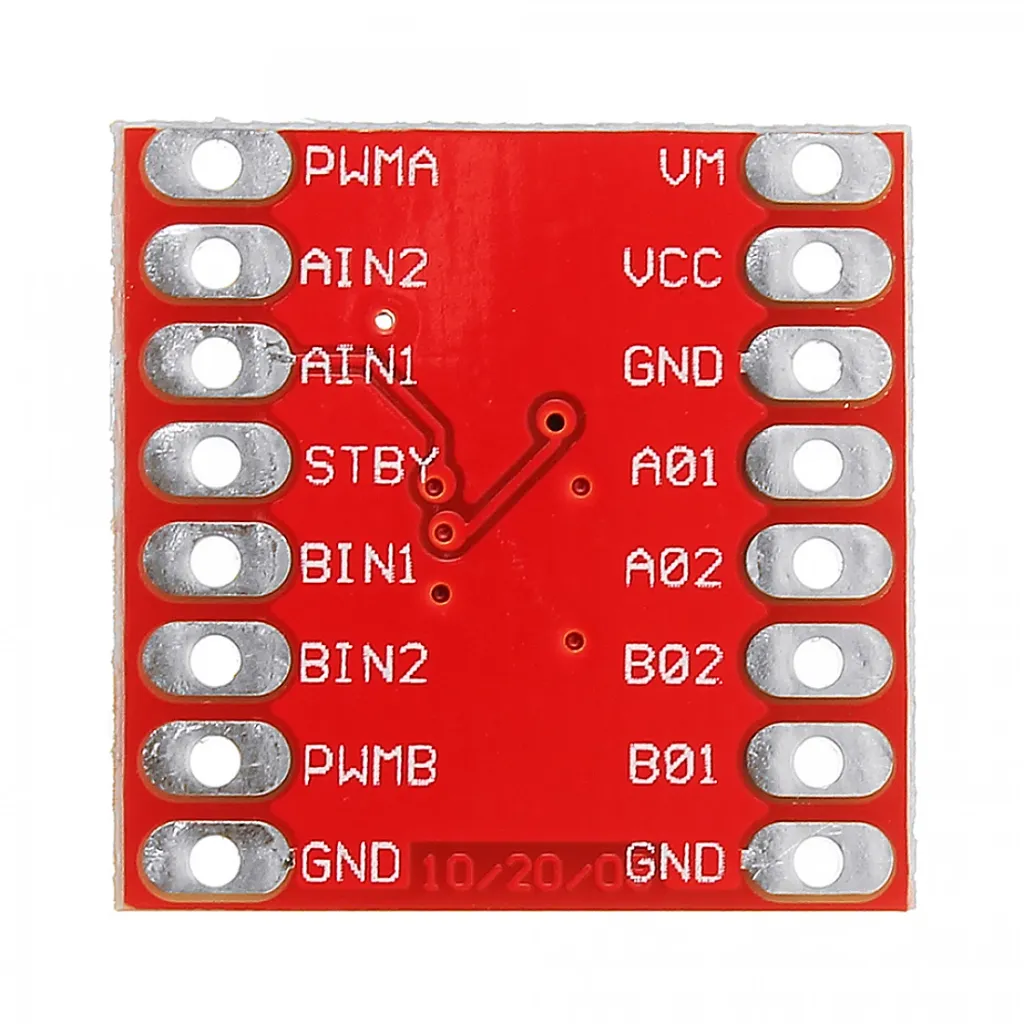
Control Inputs | PWM, DIR, STBY, A/B pin sets |
Interface | GPIO / digital control |
Dimensions | ~32 × 26 mm (approx) |
Applications
Robotics & mobile platforms
Differential drive systems
PWM speed-controlled DC motors
Stepper-driven mechanisms
IoT actuator systems
Embedded motion control projects