Product Description
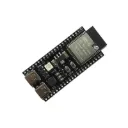
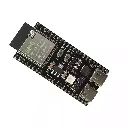
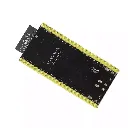
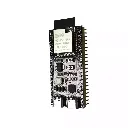
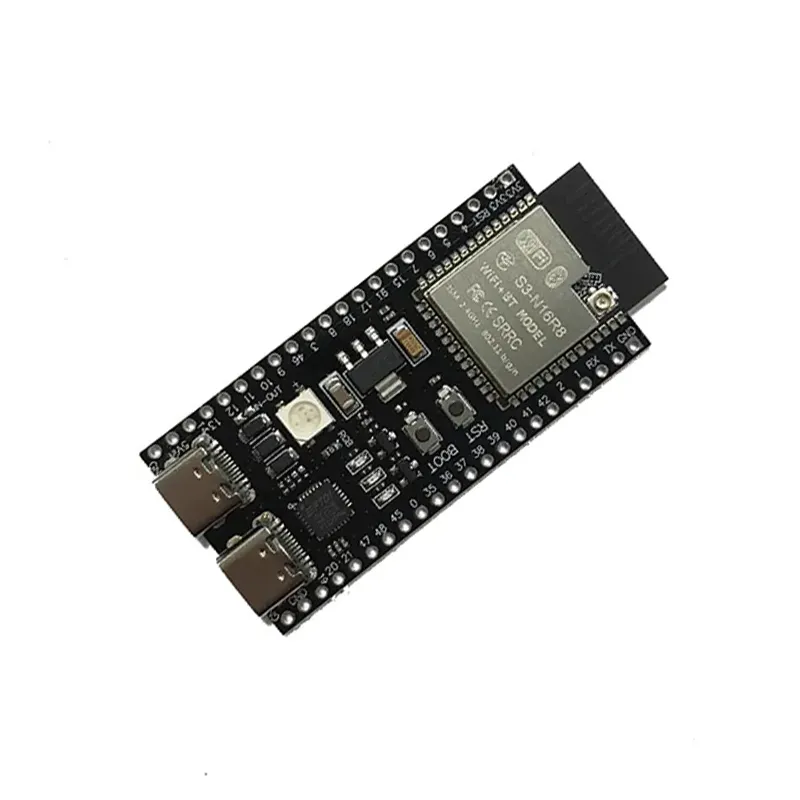
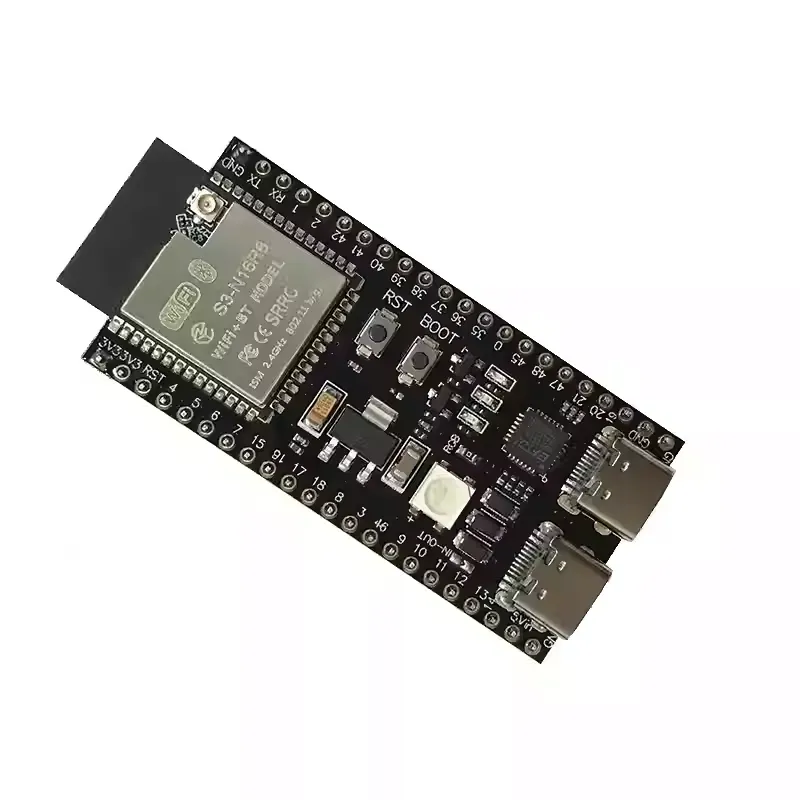
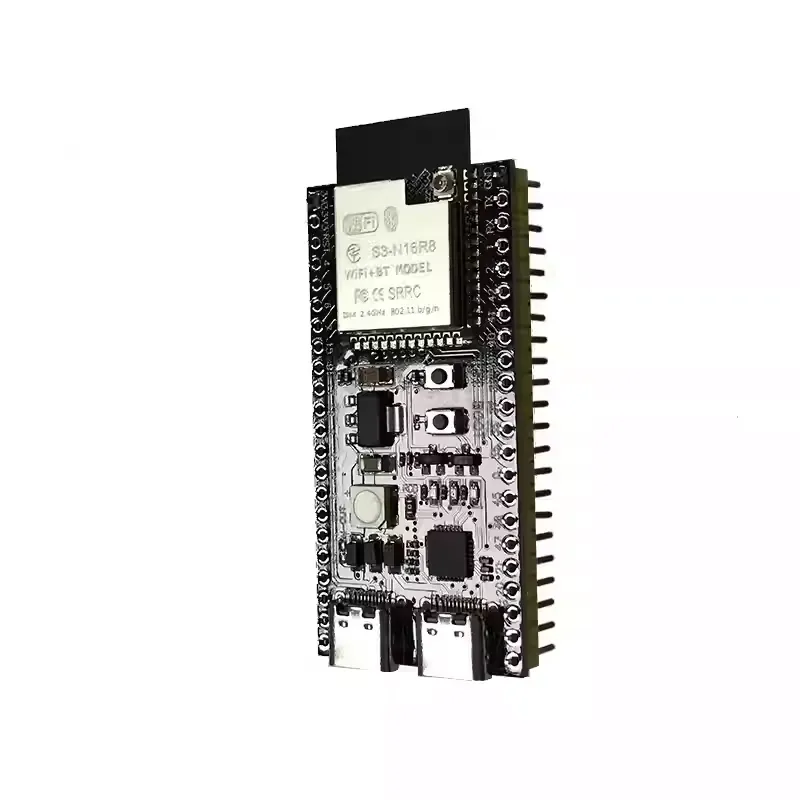
The ESP32-S3 Development Board with S3-N16R8 Module — commonly marketed as the Xiaozhi AI Voice Chat Robot Learning Board — is an advanced IoT and AI-focused microcontroller platform built around the ESP32-S3 series chip. This board further integrates the S3-N16R8 Wi-Fi + Bluetooth module along with audio input/output support and peripherals tailored for voice interaction, machine learning tasks, and robotics learning applications.
With onboard AI voice chat support, microphone and speaker interfaces, and rich connectivity, this board empowers makers, learners, and students to build voice-enabled robots, voice assistants, conversational AI demos, and multimedia IoT applications. It supports common frameworks like Arduino IDE, MicroPython, and Espressif’s ESP-IDF development environment, making it both beginner-friendly and suitable for advanced experimentation.
Key Features
ESP32-S3 MCU with S3-N16R8 Wi-Fi + Bluetooth Module
AI-oriented voice interaction capabilities
On-board microphone array or audio input (varies by variant)
Speaker or audio output interface support
Rich GPIO + peripherals: ADC, PWM, I2C, SPI, UART
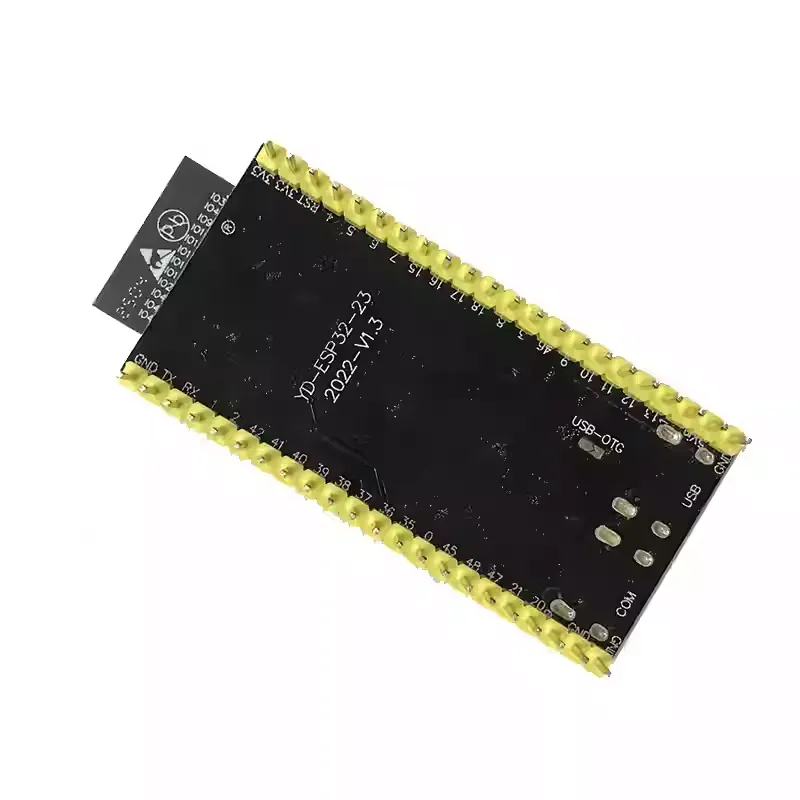
USB-to-Serial programming interface
Supports Arduino, ESP-IDF & MicroPython
Ideal for robotics, AI learning, IoT prototyping
Package Includes
1 × ESP32-S3 Development Board with S3-N16R8 Module
1 × USB Cable (for power & programming) (varies)
Documentation & Example Projects (may vary by seller)
Technical Specifications
Parameter | Specification |
MCU | ESP32-S3 (Xtensa® dual-core 32-bit) |
Module | S3-N16R8 Wi-Fi + Bluetooth |
Wi-Fi | IEEE 802.11 b/g/n |
Bluetooth | BLE 5.x |
Audio | Microphone Input + Speaker Output (board dependent) |
Interfaces | GPIO, ADC, DAC, PWM, I2C, SPI, UART |
USB | USB-C or micro-USB for power & programming |
Flash | 16 MB (varies by variant) |
RAM | Embedded SRAM |
Development Support | Arduino, ESP-IDF, MicroPython |
Dimensions | ~50 × 25 mm (varies) |
Applications
AI voice chat robots
Voice-controlled assistants
Speech recognition prototypes
Robotics navigation & human-robot interaction
IoT multimedia applications
Embedded machine-learning demos
Audio input/output experiments