Product Description
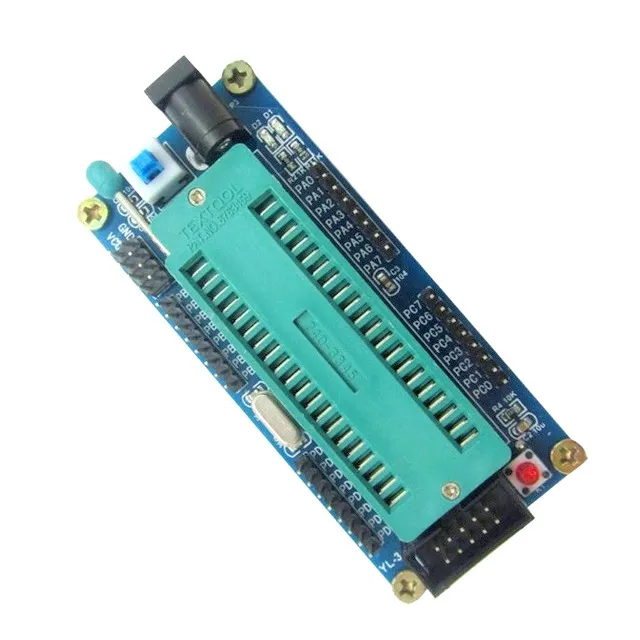
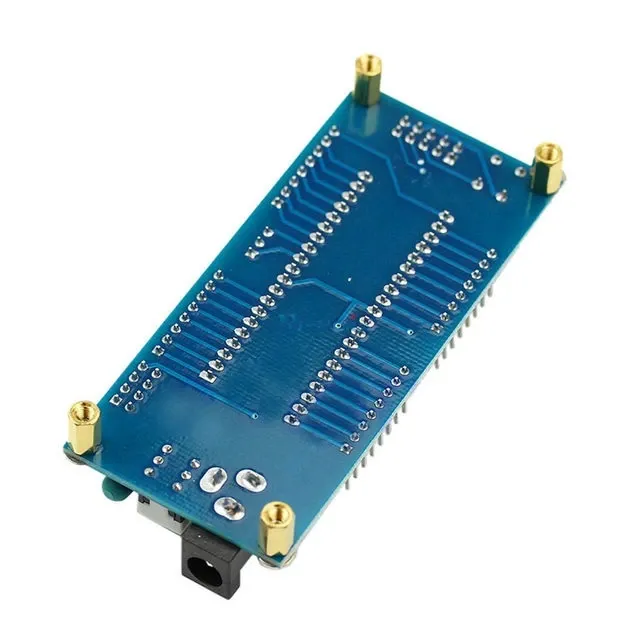
The ATMEGA16 / ATmega32 ISP AVR Minimum Development System Board Module is a ready-to-use development platform built around the classic 8-bit AVR microcontroller architecture. Designed for both beginners and experienced embedded developers, this board supports either the ATmega16 or ATmega32 MCU chip and includes essential support circuitry, ISP (In-System Programming) header, clock source, reset circuitry, and accessible I/O pins.
With multiple digital and analog pins brought out to headers, this board simplifies connecting sensors, actuators, displays, and communication modules. The ISP interface allows easy programming using AVR programmers such as the USBasp, AVRISP mkII, or an Arduino as ISP, making it ideal for firmware development, learning AVR architecture, robotics controllers, automation systems, and real-time embedded projects.
Key Features
ATmega16 / ATmega32 AVR microcontroller support
ISP programming header (6-pin) for direct AVR flash programming
Crystal oscillator onboard for stable clock timing
Reset circuit and power regulation included
All GPIO pins easily available through headers
Breadboard-friendly / modular format
Perfect for education, prototyping & embedded applications
Package Includes
1 × ATMEGA16 / ATmega32 Minimum System Board
1 × ISP Header Installed
Mounting / header pins (varies by supplier)
Technical Specifications
Parameter | Specification |
MCU Supported | ATmega16 / ATmega32 (8-bit AVR) |
Clock | External crystal (typical 16 MHz) |
Flash Memory | 16 KB (ATmega16) / 32 KB (ATmega32) |
SRAM | 1 KB (ATmega16) / 2 KB (ATmega32) |
EEPROM | 512 B / 1 KB (varies) |
Operating Voltage | 5 V DC |
Programming | ISP (In-System Programming) |
Interfaces | GPIO, UART, SPI, I2C, ADC |
Board Format | Minimum System Dev. / Breakout Board |
Compatible IDE | AVR GCC / Atmel Studio / Arduino (via cores) |
Applications
AVR microcontroller learning & education
Firmware development & prototyping
Robotics motion & control
Sensor interfacing & data logging
Industrial automation testing
Real-time control systems
Embedded system experiments